
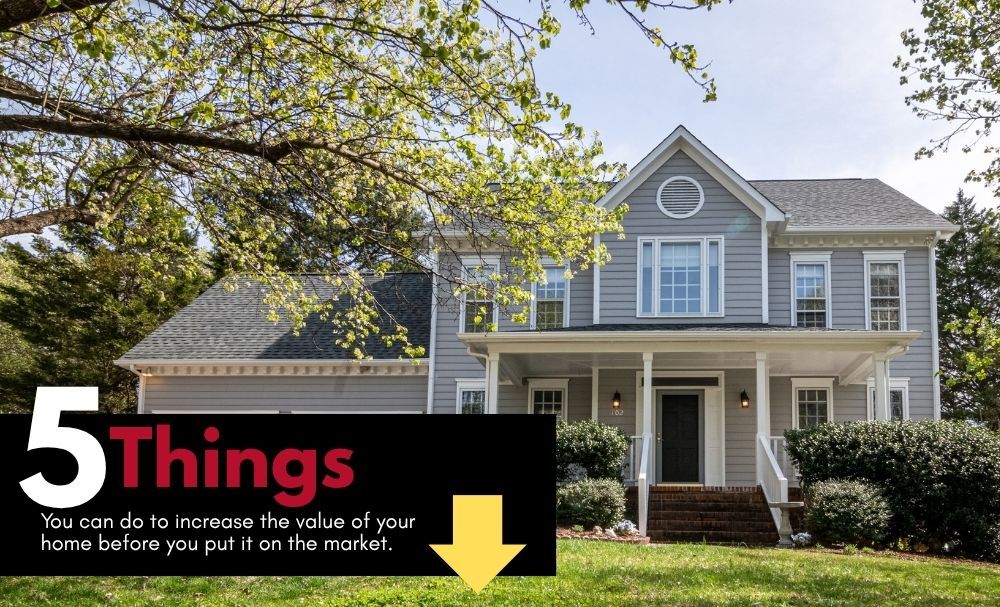
When homeowners decide to sell, one of the first questions they ask is: “What can I do to get the most money for my home?”
The good news is you don’t necessarily need a major renovation or a six-figure remodeling budget. In many cases, strategic improvements made before your home hits the market can dramatically change how buyers perceive it — and perception plays a major role in what they’re willing to pay.
Here are five things to consider before putting your home on the market.
1. Start With a Deep Clean and Declutter
This sounds simple, but it’s one of the most overlooked steps.
Buyers want to see space. Overloaded countertops, packed closets, oversized furniture and years of accumulated belongings can make even a large home feel smaller.
Remove unnecessary furniture, clear countertops, organize closets and give the entire home a professional-level cleaning.
You’re not just cleaning the house. You’re creating a product buyers can imagine themselves owning.
2. Freshen Up the Paint
Few improvements provide as much visual impact for the money as fresh paint.
Bold or highly personalized colors may work for you, but they can distract buyers. Neutral, modern colors help brighten rooms, make spaces feel larger and allow buyers to focus on the home rather than the décor.
Pay particular attention to heavily used rooms, hallways, trim and any areas showing wear.
3. Improve Your Curb Appeal
Buyers begin forming an opinion before they ever walk through the front door.
Trim shrubs, remove overgrown landscaping, clean walkways, power wash surfaces and make sure the lawn looks maintained.
Consider painting or updating the front door, replacing worn house numbers and adding simple seasonal landscaping.
The goal is to create an immediate feeling of: “This house has been taken care of.”
4. Make Small Repairs Before Buyers Notice Them
That loose doorknob you’ve ignored for three years?
A buyer will find it.
Fix dripping faucets, cracked outlets, damaged trim, broken switches, sticking doors and other obvious maintenance items.
Individually, these problems may seem minor. Collectively, they can cause buyers to wonder what larger problems might exist that they can’t see.
A well-maintained home communicates confidence.
5. Stage the Rooms That Sell the House
You don’t necessarily need to professionally stage every room.
Focus on the spaces buyers care about most: typically the living room, kitchen and primary bedroom.
Remove excess furniture, improve lighting, simplify décor and create clear focal points.
The objective isn’t to show buyers how you live in the home. It’s to show them how they could live there.
Preparation Before Marketing Matters
One of the biggest mistakes sellers make is putting a home on the market first and trying to improve it later.
Your strongest marketing opportunity happens when the listing first launches.
Before spending thousands of dollars on improvements, talk with an experienced local real estate professional who understands what today’s buyers are responding to.
Sometimes the smartest improvement isn’t the most expensive one.
It’s the one that creates the greatest perceived value.
1 thought on “5 Things You Can Do to Increase Your Home’s Value in Nutley Before You Put It on the Market”
Comments are closed.