

Table of Contents
- How We Selected the Best NJ Suburbs for NYC Commuters
- Quick Comparison: Commute Times, Transit, and Housing Costs
- 1. Nutley NJ Commute to NYC: Small-Town Feel, Direct Bus Access
- 2. Montclair: Midtown Direct Rail and Cultural Downtown
- 3. Maplewood: Top-Rated Schools and Reliable Rail Connection
- 4. Summit: Express Trains and a Walkable Downtown
- 5. Ridgewood: Bergen County Rail Access and Village Living
- 6. Cranford: Affordable Raritan Valley Line Access
- What Else to Weigh Before You Choose
- Frequently Asked Questions
Last Updated: October 12, 2026
How We Selected the Best NJ Suburbs for NYC Commuters
Finding the right NJ suburbs for NYC commuters comes down to one question: how much of your day do you want to spend getting to work? Buyers often fall for a town’s downtown, then discover the commute doesn’t fit their schedule.
We ranked seven towns on four factors: peak-hour travel time to Midtown or Lower Manhattan, rail and bus options, housing stock, and total monthly cost of living and commuting.
When you tour a town, ride the actual commute during peak hours before you make an offer. A Saturday visit tells you nothing about a Tuesday 7:40 a.m. train.
Quick Comparison: Commute Times, Transit, and Housing Costs
Travel times below are typical peak-hour, door-to-door estimates and vary by your exact address and station choice.
| Town | Main Transit | Peak Commute to Manhattan | Housing Profile | Best For |
|---|---|---|---|---|
| Nutley | NJ Transit bus | About 40-55 min by bus | Single-family, modest yards | Buyers who want value and a small-town feel |
| Montclair | NJ Transit rail | About 40-50 min | Wide range, older homes | Walkable downtown living |
| Maplewood | NJ Transit rail | About 45-55 min | Colonials, tree-lined streets | Families focused on schools |
| Summit | NJ Transit rail | About 50-60 min | Larger homes, higher prices | Express-train riders |
| Ridgewood | NJ Transit rail | About 55-65 min | Village-style, varied | Bergen County buyers |
| Cranford | Raritan Valley Line | About 50-60 min | Smaller homes, starter stock | Budget-conscious commuters |
1. Nutley NJ Commute to NYC: Small-Town Feel, Direct Bus Access
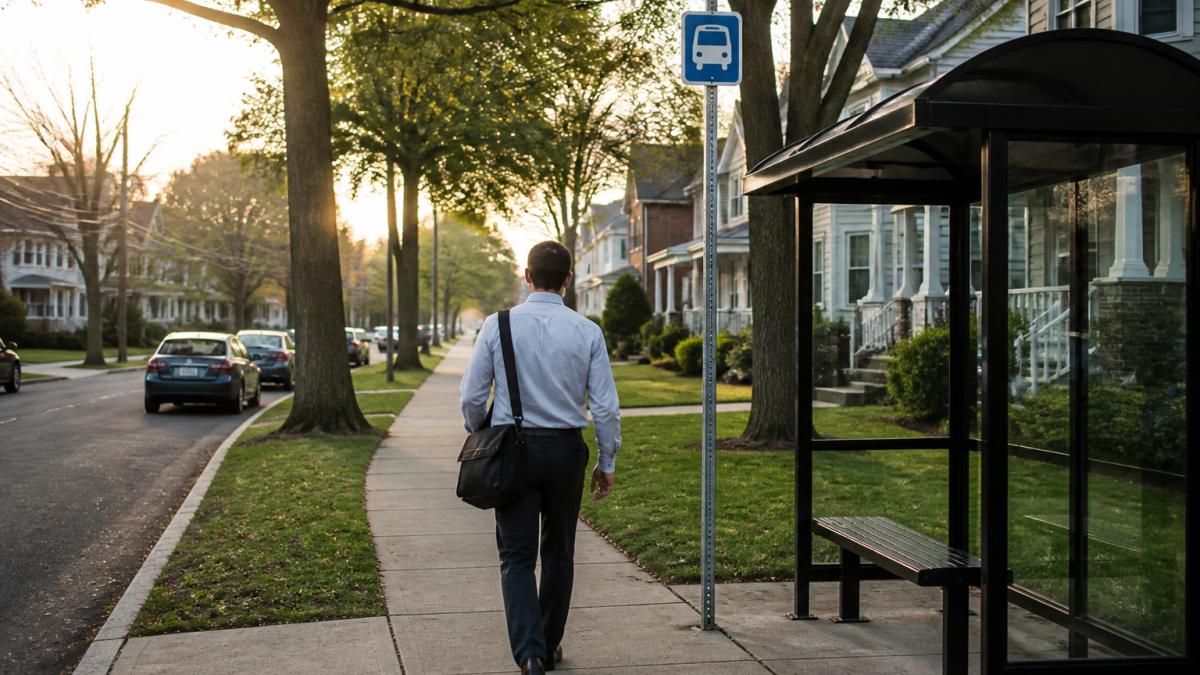
The Nutley NJ commute to NYC runs on NJ Transit buses, with several routes to the Port Authority Bus Terminal in Midtown.
Commute Options and Peak-Hour Timing
Buses run frequently during rush hour, and many residents walk to their stop. The trade-off: buses share the road with traffic, so a bad morning on the highway stretches your trip.
A door-to-door bus commute has four segments, and only one is the ride itself:
- Walk or drive to your stop. In Nutley, a side-street stop versus a main-corridor one can add 10 minutes of walking each way.
- Wait time. Peak buses on the busiest routes run every few minutes, but mid-morning and evening frequencies thin out.
- The ride. This is the 40-55 minute figure, and it swings with traffic near the Lincoln Tunnel.
- The last mile in Manhattan. Port Authority sits at 8th Avenue and 42nd Street, so an East Side or below-34th Street office adds a subway ride or a 15-25 minute walk.
Buyers often time only segment three, then feel blindsided when the full trip runs 70 minutes on a rainy Monday. Build your buffer around the worst realistic day, not the average one.
What the Bus Actually Costs You Each Month
Because Nutley riders skip station parking, the monthly math differs from rail towns. NJ Transit bus fares are distance-based, and a monthly pass from the Nutley area into Port Authority generally lands in the low-to-mid triple digits.
The savings show up on the other side of the ledger: no resident station permit, no daily garage fee, no wear-and-tear from a daily drive to a rail lot.
Homes for Sale in Nutley NJ and What Buyers Should Expect
Homes for sale in Nutley NJ skew toward single-family houses on modest lots, mixing older construction with updated interiors. Prices sit below Montclair and Summit, making Nutley a strong entry point for first-time buyers. Expect mid-20th-century capes, colonials, and split-levels, many with finished basements and detached garages. Property taxes run high relative to the national average, so pull the actual tax figure for any address.
Reliability and Disruption Alternatives
The honest knock on a bus commute is variance. A rail line has a published schedule and a predictable track; a bus has a schedule and a highway. When the tunnel approach backs up, every bus on the route absorbs the delay.
The mitigation is route choice. Nutley sits near multiple corridors into the city, and some riders pair a bus to a rail or PATH connection at a park-and-ride rather than riding to Port Authority, trading a transfer for schedule certainty on bad traffic days.
Nutley’s edge is value plus a direct bus. You give up some schedule certainty, but you keep more of your budget and skip station parking fees. Budget the full door-to-door trip, not just the ride, and keep a rail-plus-PATH fallback for the worst traffic mornings.
2. Montclair: Midtown Direct Rail and Cultural Downtown
Montclair pairs Midtown Direct rail service with one of the most walkable downtowns in Essex County.
The housing market is broad, from compact condos near the stations to large Victorians on quiet streets, a range that draws young professionals and families alike.
Where it falls short: competition. Montclair is popular, and well-priced homes move quickly. Buyers who need to sell before they buy should line up financing early.
3. Maplewood: Top-Rated Schools and Reliable Rail Connection
Maplewood’s reputation rests on two things: schools and a dependable rail connection. The NJ Transit line through town reaches Manhattan in about 45 to 55 minutes during peak hours.
The housing stock leans toward colonials and Tudors on tree-lined streets. Inventory is tight, and homes near downtown draw multiple offers.
A common mistake is assuming the school reputation guarantees a specific home. Attendance zones vary by block.
4. Summit: Express Trains and a Walkable Downtown
Summit offers some of the fastest peak-hour rail trips on this list, with express trains reaching Manhattan in roughly 50 to 60 minutes door to door, and a compact downtown a short walk from the station.
You pay for that convenience: Summit’s housing prices run higher than most towns here, and the tax base reflects it. Buyers who thrive here are usually trading commute time for cost, not the other way around.
Don’t buy near a station assuming parking comes with the house. Many Summit lots have waitlists for resident permits, and a spot can take months to secure.
5. Ridgewood: Bergen County Rail Access and Village Living
Ridgewood delivers Bergen County rail access with a genuine village center. Peak trains to Manhattan run about 55 to 65 minutes, and the downtown offers a walkable core many suburbs lack.
Housing varies from smaller starter homes to larger properties near the village. Buyers relocating from Manhattan often want the village feel without giving up rail. Ridgewood fits that brief well.
6. Cranford: Affordable Raritan Valley Line Access
Cranford sits on the Raritan Valley Line, with peak trips to Manhattan in the 50 to 60 minute range. Some trains require a transfer at Newark, which adds time and a platform change, so check the schedule for the specific trains you’d actually ride.
The upside is price: Cranford’s smaller homes and starter properties cost less than comparable Essex County towns, a gap that matters for budget-conscious commuters.
What Else to Weigh Before You Choose
Most guides stop at travel time, the least useful number in the decision, because it ignores what the commute costs, how often it fails, and whether it applies to your work schedule. Here’s a framework to consider when relocating.
Build a Total Monthly Cost Stack, Not a Fare Estimate
Cost of living in New Jersey vs New York City favors the suburbs on housing and everyday expenses, but New Jersey property taxes run high by national standards. Don’t compare towns on one line item, stack all of these first:
- Transit pass. A monthly rail or bus pass, priced by zone and distance. If your office isn’t walkable from the terminal, add a second monthly pass for the subway or local bus.
- Station parking. Either a resident permit (often with a waitlist) or a private lot rate. This is a real monthly line item in rail towns and zero in bus-only towns like Nutley.
- First-mile cost. If you can’t walk to your stop or station, you’re driving, biking, or taking a local shuttle. Factor gas, tolls if you cross a bridge or tunnel, and vehicle wear.
Add those five lines for each town on your shortlist and the ranking often changes. A town with a lower purchase price but a long drive to a permit-waitlisted station can cost more per month than a pricier town within walking distance of a train.
Score Reliability, Not Just Speed
Commute reliability deserves its own line item. Rail is generally more predictable than bus, but both have bad days. Ask four questions:
- How frequent is peak service? A train every 10 minutes absorbs a missed connection; one every 45 minutes turns a delay into an hour.
- How many transfers? Every transfer is a failure point. A one-seat ride beats a faster trip with a platform change.
- What does late-night service look like? If you work past the evening peak, check the last few departures, some lines thin out sharply after rush hour.
- What’s the disruption alternative? If your line goes down, is there a parallel bus, PATH connection, or ferry? Towns with a fallback recover faster.
Buyers commonly overweight the fastest advertised trip and underweight the worst-case trip, and the worst case is what you’ll remember.
Map the Commute to Your Actual Schedule and Destination
Hybrid workers should map the reverse commute too: trains and buses run less often outside peak hours, and mid-day frequencies can be a fraction of rush-hour service.
Destination matters as much as schedule. If your job sits in Lower Manhattan rather than Midtown, add a PATH or subway leg to every estimate above. Non-Manhattan commutes often run 15 to 25 minutes longer door to door.
A Simple Way to Score Your Shortlist
Give each town a 1-5 score on four dimensions: realistic worst-case door-to-door time, total monthly cost stack, reliability and fallback options, and fit with your actual office schedule and destination. Weight them by what you personally value, a household that walks to the train scores differently from one that drives to a permit lot, and an occasional-office worker differently from a five-day commuter.
When you’re ready to compare homes in person, our team can walk you through NJ Transit’s system maps and schedules and match towns to your actual work location.
Don’t compare towns on a single travel-time number pulled from a search result. Time the full trip yourself during peak hours, price the pass and the parking, and confirm the schedule for the days you’ll actually ride. The town that wins on paper often loses once the full cost stack and worst-case timing are on the table.
Frequently Asked Questions
Is Nutley, New Jersey, a good place to live for NYC commuters?
Nutley offers a practical balance for NYC commuters: direct NJ Transit bus service to the Port Authority Bus Terminal, a quiet residential character, and lower home prices than many Essex County towns with rail stations. The trade-off is that Nutley lacks its own train station, so commuters rely on buses or drive to nearby rail hubs. For buyers who want suburban living with a manageable commute and strong value, Nutley ranks among the best NJ suburbs for NYC commuters.
How long is the commute from Nutley to New York City?
The Nutley NJ commute to NYC typically runs 35 to 55 minutes by NJ Transit bus to the Port Authority Bus Terminal, depending on traffic and time of day. Peak-hour trips lean toward the longer end. Commuters who drive to a nearby train station and take rail into Penn Station often face a similar total door-to-door time once parking and transfers are factored in. Testing your specific route at your actual commute hour is the only way to get a reliable number.
Is it cheaper to live in New Jersey or New York City?
The cost of living in New Jersey vs New York City depends on the town and your housing situation. New Jersey suburbs generally offer more square footage per dollar, lower rent for comparable space, and no NYC resident income tax. However, property taxes in many NJ towns run higher than what NYC homeowners pay, and commuter rail or bus passes add a monthly expense. The break-even point shifts based on your tax bracket, housing budget, and how often you commute.
Can you commute from Essex County to New York City without a car?
Yes, several Essex County towns support a car-free commute. Nutley has direct NJ Transit bus routes to Manhattan. Montclair and Maplewood offer Midtown Direct rail service to Penn Station. Towns like Bloomfield and Belleville also have bus connections. If you choose a town with a walkable downtown and a station or bus stop nearby, you can manage without a car, though many commuters keep one for errands and off-peak travel.