
Table of Contents
- High ROI Home Improvements That Buyers Notice
- Essential Safety and Structural Repairs for Selling
- How to Prioritize Home Repairs for Resale on a Budget
- Pre-Listing Home Inspection Checklist to Avoid Deal-Breakers
- Curb Appeal and Mechanical System Maintenance
- Decluttering, Staging, and Deep Cleaning for Buyer Perception
- Tax and Financial Implications of Pre-Sale Repairs
- Conclusion
- Frequently Asked Questions
Last Updated: September 18, 2026
High ROI Home Improvements That Buyers Notice
The best home repairs for selling are the ones buyers can see, verify, and check off within the first few minutes of a showing. At Realty Executives Elite Homes, over two decades of industry experience in the Nutley area shows one pattern: visible, clean, and functional beats expensive and ambitious.
Kitchen and Bathroom Cosmetic Upgrades
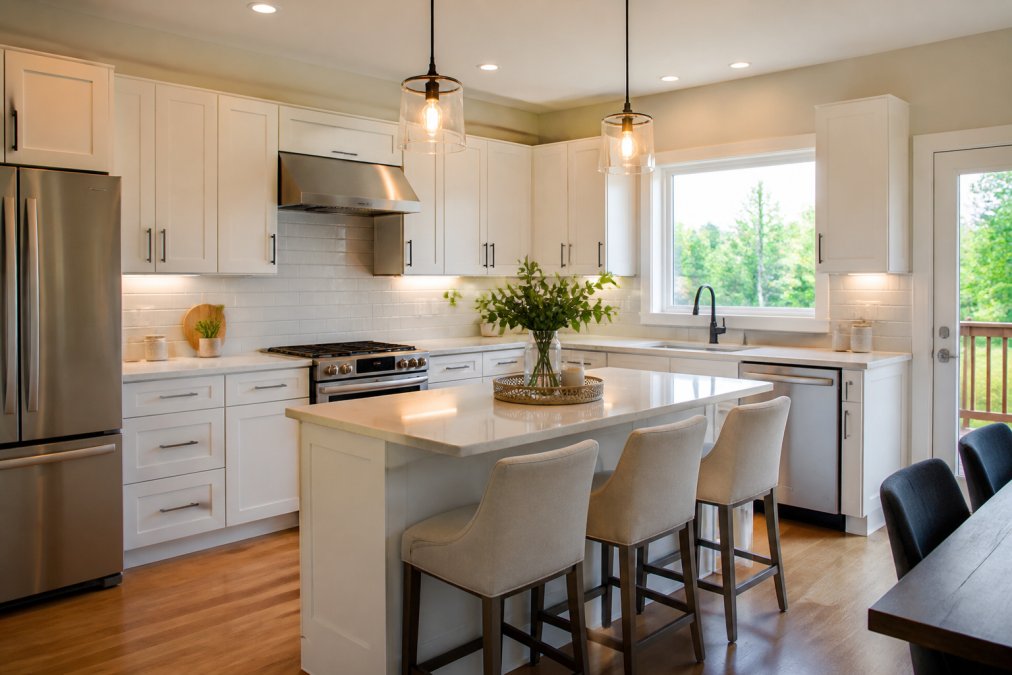
Kitchen and bathroom updates return the most attention per dollar, but only when they stay cosmetic. Cabinet hardware, faucets, and light fixtures are cheap to swap and instantly modernize a room, while regrouting tile and resealing around tubs removes the “tired” look buyers punish hardest. A mid-range refresh almost always outperforms a full remodel at resale.
Flooring Refinishing and Neutral Paint Colors
Flooring refinishing and neutral paint colors are the two highest-visibility, lowest-risk moves you can make. Refinishing existing hardwood costs far less than replacement and reads as “well-kept” rather than “flipped.” Neutral paint widens your buyer pool; bold colors force buyers to budget for repainting before they’ve even made an offer.
Essential Safety and Structural Repairs for Selling
Safety and structural repairs are the one category you cannot skip: they surface in every home inspection and directly threaten financing. A lender will not fund a house with unresolved structural or safety hazards.
Foundation Cracks, Roof Condition, and Moisture Damage
Foundation cracks, roof condition, and moisture damage kill the most contracts. Hairline cracks are usually cosmetic, but any crack wider than a coin, or one actively widening, signals a structural issue an inspector will flag. A roof near the end of its life becomes a negotiation chip, and moisture damage points to water intrusion buyers treat as an open-ended liability.
Electrical Hazards and Plumbing Leaks
Electrical hazards and plumbing leaks are quiet deal-breakers because they’re invisible until inspected. Outdated wiring, missing GFCI outlets near water, and an overloaded panel all read as safety hazards, while even slow leaks leave stains and hint at future repair bills. Fixing these before listing removes the buyer’s easiest reason to demand a price cut.
How to Prioritize Home Repairs for Resale on a Budget
Prioritizing home repairs for resale on a budget means ranking every repair by two questions: will it show up in the inspection, and will a buyer pay more because of it? Sellers who get this right spend in the right order, not the most.
The Three-Tier Priority Framework
Sort every candidate repair into one of three tiers. The tier determines whether you do it at all.
Repair vs. Replace Decision Matrix
Use this framework to decide fast. The thresholds below reflect common industry rules of thumb, confirm specifics with a qualified contractor, since local codes and your home’s condition can change the answer.
| Situation | Repair | Replace |
|---|---|---|
| Asphalt shingle roof with 5+ years of remaining life | Patch, reseal flashing, replace missing shingles | Not needed |
| Roof at or near end of its expected service life | Not advisable, buyers and inspectors will flag it | Replace before listing, or price it in |
| HVAC 10+ years old and still running | Service, clean, replace filter | Replace if it is failing, leaking refrigerant, or short cycling |
| HVAC under 10 years old and functional | Service and document | Not needed |
| Solid cabinets with dated finish | Paint and new hardware | Only if water-damaged, warped, or structurally failing |
| Single-pane, drafty windows | Weatherstrip and caulk | Replace if budget allows and the home is in a cold climate |
| Scratched but flat hardwood | Refinish | Replace only if warped, cupped, or water-damaged |
| Water heater 10+ years old | Service and inspect anode rod | Replace, it is a low-cost item that removes a buyer objection |
| Failing electrical panel | Not advisable | Replace, this is a Tier 1 safety item |
| Dated but functional bathroom | Regrout, reseal, replace fixtures and hardware | Full remodel only if the layout is dysfunctional |
The Cost-Recovery Lens
Not every repair returns the same share of its cost at resale. The highest-recovery projects tend to be inexpensive, highly visible, and low-risk: interior paint, minor kitchen and bathroom refreshes, flooring refinishing, and exterior cleaning and landscaping. The lowest tend to be expensive, personal, or invisible: major additions, high-end kitchen remodels, pools, and specialty rooms.
The single most useful question to ask about any repair is: “If I don’t do this, what does the buyer do with it?” If the answer is “they ask for a credit or walk,” it is Tier 1. If the answer is “they notice it and form an opinion,” it is Tier 2. If the answer is “they probably won’t mention it,” it is Tier 3, and Tier 3 is where budgets go to die.
A common mistake is spending your entire repair budget on the kitchen while ignoring a 15-year-old water heater. Buyers forgive dated finishes. They do not forgive a system that might fail in month two. Allocate your Tier 1 budget first, then see what is left for cosmetics.
Budget Allocation in Practice
Reserve the majority of your pre-listing budget for Tier 1 items, then split what remains between Tier 2 cosmetics and a small contingency. Pre-listing walkthroughs almost always surface at least one unplanned item; sellers who spend everything on paint and staging and then discover a failing water heater or active leak end up delaying the listing or accepting a lower offer.
Pre-Listing Home Inspection Checklist to Avoid Deal-Breakers
A pre-listing home inspection checklist is your best defense against surprises, because it finds problems before the buyer’s inspector does. Walking the property first lets you fix issues on your timeline instead of the buyer’s. The goal isn’t a perfect home; it’s removing the findings that give a buyer a reason to renegotiate or walk.
What to Fix Before the Buyer’s Inspection
Work through this list room by room and system by system. Each item is grouped by how an inspector typically treats it, so you can triage your budget.
-
Test every outlet, switch, and GFCI near water. A GFCI that won’t trip when tested is a standard inspection write-up.
-
Confirm the electrical panel has no double-tapped breakers, no missing knockouts, and no unlabeled circuits. Panels are one of the most common sources of lender-required repairs.
-
Check the water heater’s pressure relief valve and discharge pipe. A missing or improperly routed discharge line is a safety flag.
-
Verify smoke and carbon monoxide detectors are present, mounted, and functional on every level and outside sleeping areas.
-
Look for any evidence of a disconnected or improperly vented dryer, furnace, or water heater flue.
-
Look for foundation cracks wider than a coin, or any crack that has widened since a prior photo. Hairline shrinkage cracks in a slab or block wall are usually cosmetic; horizontal cracks in a foundation wall, or stair-step cracks in brick, are not.
-
Inspect the roof and attic for staining, soft spots, daylight through the sheathing, or a sagging ridge line. Note the roof’s approximate age, an inspector will.
-
Check under all sinks, around toilets, and inside the water heater pan for active or past leaks. Old staining with no active drip still gets reported.
-
Look for moisture damage around windows, doors, and exterior penetrations. Soft trim and bubbling paint point to water intrusion.
-
Confirm the grading slopes away from the foundation and that downspouts discharge well clear of the house.
-
Run the HVAC in both heating and cooling modes and note any strange sounds, short cycling, or weak airflow.
-
Confirm all windows open, close, and lock, and that no seals are visibly broken between panes.
-
Check that every exterior door closes and latches without lifting or dragging.
-
Clear gutters and confirm drainage runs away from the foundation.
-
Test the garage door’s auto-reverse and safety sensors.
How to Read an Inspection Report Like a Buyer
Inspectors separate findings into categories, typically safety, major defect, and maintenance, and buyers read them in that order. A safety finding can trigger a lender’s repair requirement or an insurance objection. A major defect is what a buyer uses to justify a price reduction. Maintenance items are what a buyer expects to handle themselves.
Photograph every repair you make before listing, and keep the receipts. A documented repair, with a date, a contractor, and a warranty, reads very differently to a buyer than an unexplained fix. It also gives your agent something concrete to point to when a buyer’s inspector raises the same item.
Skipping a pre-listing walkthrough and hoping the buyer’s inspector misses something is a gamble that rarely pays. Once a deal-breaker is found mid-contract, you lose your leverage and often your buyer. In a competitive market, a buyer with a repair list has more options than you do, they can walk and find another house, while you restart the clock.
When to Bring in a Pro Before You List
You don’t need a full pre-listing inspection for every home, but a few situations justify one: the home is older than roughly 30 years, has been a rental, has been vacant for an extended period, or you’ve never lived in it (such as an inherited property). A professional walkthrough usually pays for itself by surfacing findings you wouldn’t recognize.
Curb Appeal and Mechanical System Maintenance
Curb appeal and mechanical system maintenance work together: buyers form a first impression from the driveway, then verify it with the inspection report. A home that looks cared for outside raises expectations, and working systems inside confirm them.
Pressure Washing, Landscaping, and Exterior Lighting
Pressure washing, landscaping, and exterior lighting are the cheapest ways to shift buyer perception. A clean driveway and siding make a home look newer than it is, trimmed landscaping signals the property was maintained, and exterior lighting extends your showing window into the evening and makes the home feel safer.
HVAC Maintenance and Energy Efficiency Upgrades
HVAC maintenance and energy efficiency upgrades speak directly to a buyer’s monthly costs. A serviced system with a recent filter change runs quieter and inspects cleaner, and simple upgrades like sealing drafts and adding insulation let you market lower utility bills, a real selling point for buyers moving from apartments where utilities were bundled.
Decluttering, Staging, and Deep Cleaning for Buyer Perception
Decluttering, staging, and deep cleaning change how buyers feel in the space, and feeling drives offers more than square footage does. A cluttered home reads as smaller and less maintained, no matter how good the bones are.
Tax and Financial Implications of Pre-Sale Repairs
Tax and financial implications of pre-sale repairs are where sellers leave money on the table, because the timing and type of improvement can affect what you owe. Capital improvements that increase your home’s basis may reduce taxable gain when you sell; routine repairs typically don’t qualify.
Conclusion
The sellers who get top dollar aren’t the ones who spend the most. They’re the ones who fix what buyers and inspectors actually check, and who know which repairs pay off and which don’t.
Frequently Asked Questions
What repairs should I make before selling my house?
Focus on safety and structural issues first: foundation cracks, roof damage, electrical hazards, and plumbing leaks. These are common deal-breakers in a home inspection. Next, tackle cosmetic upgrades with strong return on investment, like neutral paint colors and fixture replacement. Finally, address curb appeal with pressure washing and landscaping. A pre-listing home inspection checklist helps you catch problems early so you can decide what to fix and what to disclose.
How do I prioritize home repairs for resale on a tight budget?
Start with items that affect safety, structural integrity, or the buyer’s ability to get financing. Foundation cracks, roof condition, and electrical hazards top the list. Then move to high ROI home improvements like kitchen and bathroom cosmetic updates. Use a repair vs. replace decision matrix: if a repair costs less than half the replacement cost and adds years of life, repair it. Defer purely aesthetic upgrades that won’t change buyer perception.
What should I avoid repairing when selling a house?
Skip major renovations that won’t recoup their cost, such as a full kitchen remodel or luxury bathroom addition. Avoid specialty upgrades like custom built-ins or high-end appliances that may not match buyer taste. Also, don’t fix items that are clearly disclosed and priced into the listing. Instead, focus on neutral paint colors, decluttering, and deep cleaning. These low-cost steps improve buyer perception without over-investing in a home you’re leaving.
Do minor cosmetic repairs really increase home value?
Yes, minor cosmetic repairs often deliver strong return on investment because they shape buyer perception during showings. Fresh neutral paint, updated light fixtures, and professional deep cleaning make a home feel move-in ready. According to industry data, curb appeal enhancements like pressure washing and landscaping can boost resale value. These low-cost fixes reduce the buyer’s mental list of immediate projects.