

Table of Contents
- Start With the Two Numbers That Actually Matter
- How to Find Your Town’s Official Property Tax Rate
- New Jersey General Tax Rates and the County Abstract
- New Jersey Property Tax Bill Lookup: Read Your Own Bill First
- New Jersey Property Tax Calculator: Estimate Before You Compare
- Comparing Property Tax Rates Across Towns Without Getting Fooled
- Frequently Asked Questions
Last Updated: October 5, 2026
Start With the Two Numbers That Actually Matter
Property tax rates in New Jersey confuse almost everyone because towns publish two different numbers that sound identical. Learning how to find property tax rates in NJ towns starts with knowing which number you are looking at. This guide from Realty Executives Elite Homes walks through the official sources, the math, and the traps that trip up buyers and sellers.
New Jersey leans on property taxes more than most states because it has little other revenue. That makes the rate on your bill a big deal, whether you are buying your first home or selling one you have owned for years.
General Tax Rate vs. Effective Tax Rate
The general tax rate is the rate your town uses to calculate your bill, set per $100 of assessed value.
The effective tax rate is what you actually pay as a share of your home’s market value, the number that lets you compare towns fairly.
Here is the difference in plain terms:
- General tax rate: set by the town, applied to your assessed value
- Effective tax rate: your total tax divided by your home’s true market value
The general rate can look high in a town where assessments are low. The effective rate smooths that out. If you only look at one number, make it the effective rate.
Two towns can have the same general tax rate and wildly different effective rates. Always compare effective rates when you are shopping for a home.
How to Find Your Town’s Official Property Tax Rate
No single statewide page lists every municipality’s rate, so pull the rate from the source that sets it and cross-check it against a second source. Here is the workflow for any town.
Step 1, Identify the exact taxing municipality. Confirm which municipality taxes the property before you search.
Step 4, Check the state’s published data. The New Jersey Division of Taxation property tax resources publishes statewide property tax data, including average rates and average bills by municipality.
Step 5, Confirm the rate year. A rate document is tied to a specific tax year, and the year printed at the top of the PDF is the one that applies.
Step 6, Verify against your own bill. Your tax bill shows the general tax rate actually applied, the taxable assessed value, and the rate year.
Write down three things every time you pull a rate: the municipality, the tax year, and the source. Without all three, the number is not usable in a comparison.
When Your Mailing Address Doesn’t Match Your Municipality
Your mailing address might say one town while your property actually sits in another. The postal service assigns mailing names for delivery routes, not for tax purposes, and in parts of the state the two diverge.
Here is how to confirm your real municipality:
- Check your deed or your latest tax bill, both name the taxing district
- Use your county’s official parcel viewer and search by block and lot
- Call the county clerk or the municipal tax collector if the parcel viewer is unclear
Get this wrong and you will look up the wrong rate, throwing off your whole comparison.
If you use your mailing town to look up a rate, you may pull the wrong number. Always verify with your deed or tax bill first.
Rate Year, Assessment Year, and Bill Timing
Three different years are in play at once, and mixing them up is the most common reason a rate lookup seems wrong:
- Assessment year, the year the assessor’s valuation applies to
- Tax year, the year the rate was adopted for and the bill covers
- Bill timing, when the bill is issued and due, which can lag the tax year
A town can publish a new general tax rate while your most recent bill still reflects the prior year’s rate. That is normal. Always compare rates from the same tax year, and note the year next to every figure.
New Jersey General Tax Rates and the County Abstract
Each county publishes an abstract of ratables every year listing every town with its general tax rate. It is the best source for comparing towns side by side, showing:
- The general tax rate for each municipality
- The county rate and school district rate
- The total rate used to calculate bills
Request it from your county board of taxation; many counties post it online as a PDF. The total rate is what matters, not just the municipal piece, school taxes usually make up the largest share.
New Jersey Property Tax Bill Lookup: Read Your Own Bill First
Your own tax bill is the fastest lookup tool you have, showing the exact rate applied to your property.
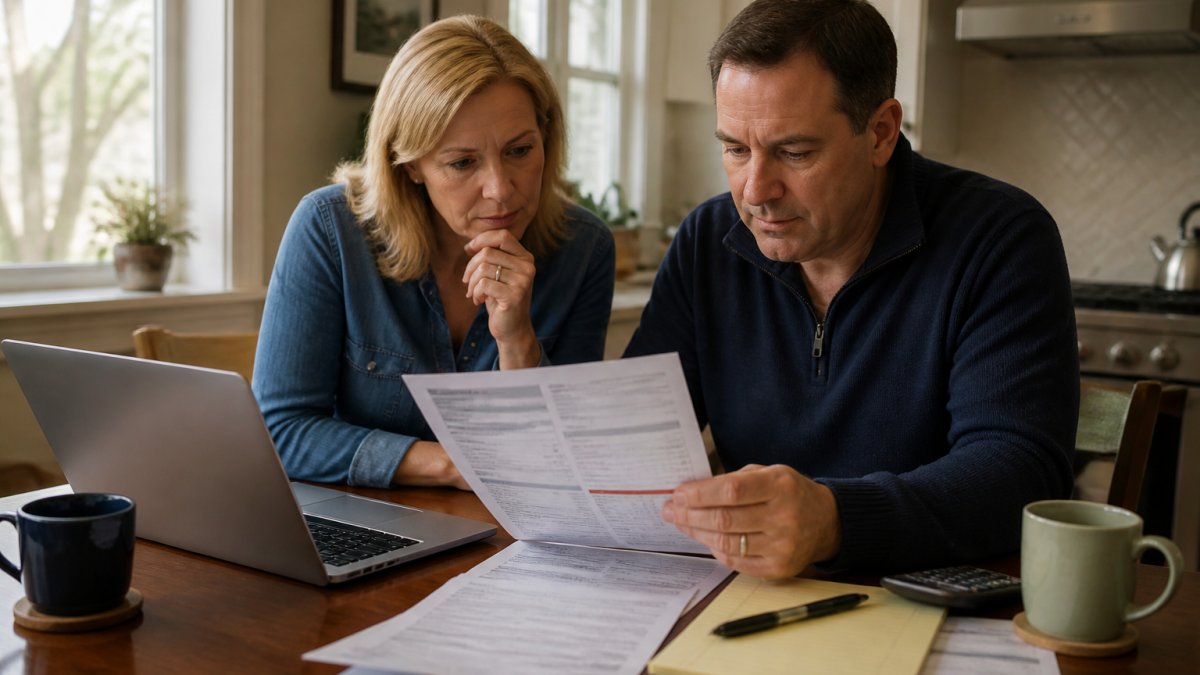
Find these items on your bill:
- Taxable assessed value
- General tax rate
- The rate year
- Your total tax amount
Divide your total tax by your assessed value, then multiply by 100 to get the rate applied to your property. If it does not match what the town publishes, call the tax collector, there may be an added local charge or a prior-year adjustment.
New Jersey Property Tax Calculator: Estimate Before You Compare
You can estimate any town’s tax on a home before you make an offer. Doing the math yourself takes about a minute and beats a generic online calculator because you control the assessed value and rate year.
Use this formula:
Estimated tax = (assessed value ÷ 100) × general tax rate
The general tax rate is expressed per $100 of assessed value, which is why you divide by 100 first. A rate of 2.5 means $2.50 of tax for every $100 of assessed value.
A Worked Example
Say a home is assessed at $300,000 and the town’s general tax rate is 2.5.
- $300,000 ÷ 100 = $3,000
- $3,000 × 2.5 = $7,500
The estimated annual tax is $7,500, or about $625 per month.
Now change one variable. If the same home sits in a town with a general tax rate of 3.2:
- $300,000 ÷ 100 = $3,000
- $3,000 × 3.2 = $9,600
Same house, same assessed value, $2,100 more per year. That is why the lookup step matters before you make an offer.
General Rate vs. Effective Rate in the Math
These two numbers are not interchangeable, and using the wrong one gives you the wrong answer:
- General tax rate, the rate the town applies to assessed value. Use this to calculate an estimated bill.
- Effective tax rate, total tax divided by market value. Use this to compare tax burden across towns.
A home assessed at $300,000 with a general tax rate of 2.5 produces a $7,500 bill. If its market value is $450,000, the effective rate is $7,500 ÷ $450,000 = 1.67%. A neighboring town with a general rate of 2.2 but assessments closer to market value might have a higher effective rate, even though its general rate looks lower.
That is the trap. A town with low assessments can show a high general rate while its effective rate is moderate, and a town with recent reassessments can show a lower general rate while its effective rate is higher. Compare effective rates across towns; use the general rate to estimate a bill.
What the Rate Does Not Tell You
The general tax rate is one input, not the whole bill. The total rate is the sum of several components:
- Municipal rate, funds local services
- County rate, funds county services
- School district rate, usually the largest single component
- Other assessments, special districts, open space, or similar local charges
When you pull a rate from a county abstract, check whether it is the total rate or only the municipal piece. Using the municipal rate alone will understate the bill, sometimes by more than half.
Two more cautions: the assessed value may not match the asking price, and the rate year may lag the current year. Ask the tax assessor for the current assessed value of the specific property, do not use the listing price as a stand-in.
| What You Need | Where to Get It | Why It Matters |
|---|---|---|
| General tax rate | Municipal tax collector or county abstract | Sets the base calculation |
| Assessed value | County parcel viewer or tax bill | The number the rate applies to |
| Rate year | Top of the rate document | Confirms you have current data |
| Effective rate | Your own math | Lets you compare towns fairly |
Pull the assessed value for the exact property, not the neighborhood average. Assessments vary block by block, and the difference can be thousands of dollars.
Cross-Check Before You Rely on the Number
A calculated estimate is a starting point, not a bill. Cross-check it against the property’s actual tax bill if one is available, and confirm the rate year on both. If they diverge, the usual causes are a rate from the wrong year, a municipal-only rate used in place of the total rate, or an assessment that changed after the bill was issued.
Comparing Property Tax Rates Across Towns Without Getting Fooled
The biggest mistake is comparing general rates across towns, that number is not built for it. Assessments differ from town to town, and a town that reassessed recently will show different values than one that has not.
Compare effective rates instead: total tax divided by market value, which puts every town on the same footing.
A few more things to watch:
- Check the rate year on every source
- Confirm the municipality, not the mailing town
- Ask whether a revaluation is scheduled
A revaluation can shift your bill even if the rate does not change. If a town is mid-revaluation, the current rate may not hold.
For a broader look at how taxes fit into the total cost of a move, the Consumer Financial Protection Bureau homebuying guide breaks down the costs buyers often miss.
If you are weighing a move within Essex County and want a straight read on what a town’s taxes mean for your budget, New Jersey’s official property tax relief programs lists the relief options available to homeowners. Our team at Realty Executives Elite Homes works with buyers and sellers across Nutley, Belleville, and Clifton, and we walk clients through this math before they list or make an offer.
Frequently Asked Questions
What are the property tax rates in New Jersey towns?
Every municipality sets its own rate, and that rate is the sum of levies from the county, the local school district, the municipality itself, and any special districts serving the address. Because the tax base and budget differ town by town, rates vary widely across the state. The only way to get a number that applies to a specific property is to pull that town’s official rate for the current tax year.
How can I look up my property tax rate?
Start with your own tax bill, which lists the general tax rate and your assessed value. If you do not have the bill, go to the municipal tax collector’s page or the county board of taxation website and find the rate table for the current year. Cross-check the number against the state’s abstract of ratables so you know you are reading the same tax year.
Is a town’s tax rate enough to compare property tax bills?
No. A low rate applied to a high assessed value can cost more than a high rate applied to a low one. Rates are quoted per $100 of assessed value, and assessments are not uniform across towns, so a direct rate comparison can mislead. Compare effective tax rates, which express the bill as a percentage of market value, and always run the numbers on a specific property.
How do I calculate estimated property taxes from a town’s tax rate?
Divide the assessed value by 100, then multiply by the general tax rate. A home assessed at $400,000 in a town with a rate of 2.5 pays roughly $10,000. Use the assessed value on the current tax bill, not the listing price, and remember that a reassessment or a new school budget can change the following year’s bill.
Property taxes are one of the largest ongoing costs of owning a home in New Jersey, and getting the number wrong can wreck a budget. Realty Executives Elite Homes helps buyers and sellers read the real numbers before they commit, with over two decades of local market experience, a digital-first marketing approach, and hands-on guidance through complex sales. Get started with Realty Executives Elite Homes and make your next move with the tax picture in full view.