

Table of Contents
- How a Digital-First Broker Differs From a Traditional Firm
- The Role of a Luxury Real Estate Digital Marketing Strategy
- Benefits of Virtual Home Tours for Luxury Listings
- Social Media Marketing for Luxury Property Sales
- Pros of a Digital-First Broker for Luxury Sales
- Cons and Limitations of a Digital-First Broker
- Hybrid vs. Digital-Only: Which Model Fits Luxury Sellers?
- Frequently Asked Questions
Last Updated: October 1, 2026
How a Digital-First Broker Differs From a Traditional Firm
A digital-first broker runs the transaction through online tools rather than a storefront office. Listings go live through syndication platforms, buyer interest is tracked in a CRM, and showings often start as virtual tours. The traditional model leans on foot traffic, print, and in-person networking.
That difference matters most for luxury property sales, where the buyer pool is national or international rather than local. At Realty Executives Elite Homes, broker-owner Matthew De Fede leverages a sophisticated digital-first marketing strategy across platforms like YouTube and Instagram, backed by over two decades of industry experience. The trade-off is real: digital reach widens the audience, but it removes some of the hallway conversations that once surfaced quiet, off-market interest.
National Association of Realtors research on how buyers search for homes
The Role of a Luxury Real Estate Digital Marketing Strategy
A luxury real estate digital marketing strategy is the plan that decides where a listing appears, who sees it, and how interest converts into a showing. It covers listing syndication, paid placement, video, email, and the follow-up sequence that keeps a high-net-worth buyer engaged.
Here is where most agents get it wrong. They treat exposure as the goal when qualification is the actual job. A listing seen by 40,000 unqualified viewers generates noise. A listing seen by 400 buyers with real intent generates offers.
A working strategy usually includes:
- Professional photography and video shot before the listing goes live
- Syndication to major portals plus the brokerage’s own site
- Targeted social campaigns aimed at buyer intent, not broad reach
- A CRM sequence that follows up within minutes, not days
- Market reports sent to past clients who may know a buyer
Set the follow-up sequence before the listing launches, not after. The first hour of inquiry response is when buyer intent is highest, and a manual reply at 9 p.m. loses to an automated one at 9:01 p.m.
Benefits of Virtual Home Tours for Luxury Listings
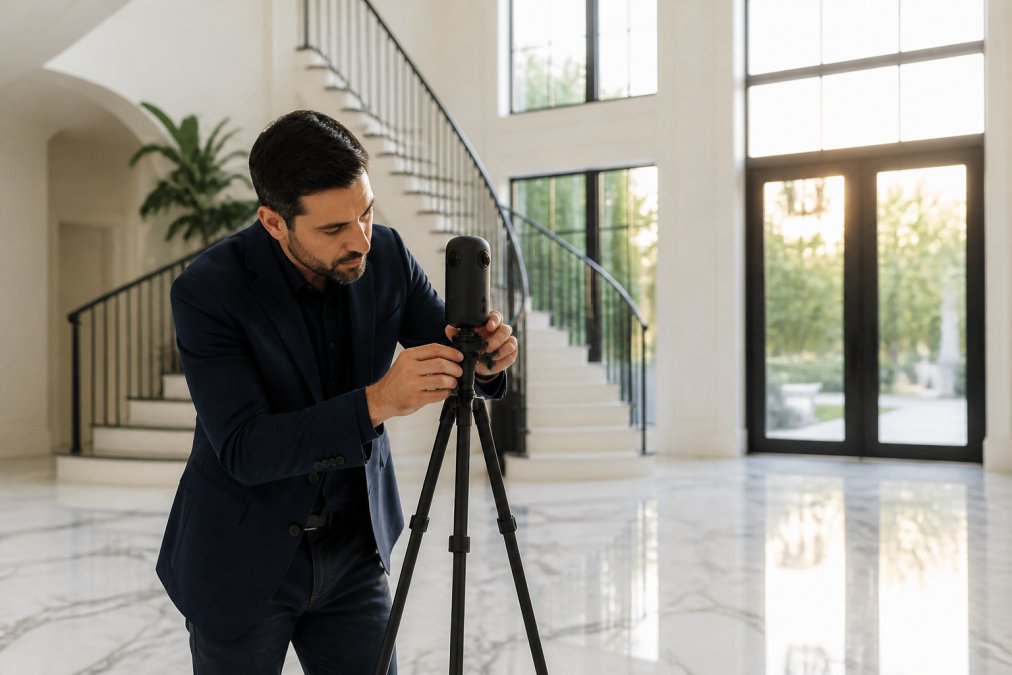
Virtual tours let a buyer walk a property from another state or country before booking a flight. For luxury listings, that filters the audience early: only serious buyers schedule an in-person visit.
Platforms like Matterport capture high-fidelity 3D walkthroughs and generate floor plans automatically, which helps remote buyers judge flow and scale. The practical gain is fewer wasted showings. The limitation is that a tour cannot convey finish quality, natural light at different hours, or the feel of a street.
Social Media Marketing for Luxury Property Sales
Social media marketing for luxury property sales works when the content shows the property and the neighborhood, not just the price. Video tours, walkthrough reels, and short market updates outperform static listing photos because they hold attention longer.
The honest caveat: followers do not sell houses. A large following with no buyer intent is a vanity metric. What converts is a targeted campaign pointed at people already searching in a specific price band and area, paired with a clear next step.
Pros of a Digital-First Broker for Luxury Sales
The main advantage is reach, but for luxury the more important advantage is qualification. A digital-first broker can put a listing in front of buyers who would never drive past the property, then use data to separate real intent from idle curiosity before a single showing is scheduled. When the pool of qualified buyers at a given price band is small, that filtering is worth more than raw exposure.
Where a digital-first model earns its keep on luxury:
- Wider market reach through syndication, paid placement, and social campaigns aimed at buyers outside the immediate metro, including international buyers who begin their search online months before they travel.
- Faster lead response using automated workflows and CRM integration. The first hour of inquiry response is when buyer intent is highest; an automated reply at 9:01 p.m. beats a manual one the next morning.
- Data-driven insight into which listings and campaigns draw real interest, so the marketing budget follows evidence instead of habit.
- Lower overhead, which can translate into more flexible commission structures or a flat-fee listing arrangement rather than a full percentage.
- Better remote buyer experience through virtual tours, digital document signing, and secure portals that let a buyer review disclosures without a cross-country flight.
Luxury-specific digital service tiers
This is where most general residential articles stop and where luxury actually differs. A digital-first luxury practice typically layers high-touch services on top of the digital stack rather than replacing them:
- White-glove virtual staging, digitally furnishing an empty or dated interior so remote buyers can read scale and flow, then removing the staging before in-person showings so the property shows as-is.
- Private digital portals, a password-protected listing page that holds the full photo set, floor plans, disclosure packet, and showing calendar, shared only with vetted buyers and their agents instead of published to every syndication site.
- Digital concierge coordination, one point of contact who schedules inspections, appraisals, and vendor walkthroughs through a shared calendar, so the seller is not fielding calls from six different parties.
- Pre-market digital previews, a controlled release to a curated buyer list before the listing goes public, which surfaces off-market interest without exposing the property to the open market.
Cons and Limitations of a Digital-First Broker
The clearest drawback is trust. Luxury sellers often want a named person who will walk the property, not a platform. A digital-only model can feel transactional at exactly the moment discretion matters most.
Where it falls short:
- Weaker local relationships if the broker has no physical presence in the market
- Privacy risk when listing details and seller information move through multiple platforms
- Less mentorship for newer agents working without an office environment
- Overreliance on tools that require setup and ongoing management to work
- Impersonal feel for sellers who expect a concierge-level relationship
Posting a luxury listing‘s interior, address, and owner details across every platform can expose a seller who wanted discretion. Confirm what may be published publicly before the first post goes live.
Hybrid vs. Digital-Only: Which Model Fits Luxury Sellers?
The labels get used loosely, so start with the distinction that actually matters. A tech-enabled agent is a licensed professional who uses digital tools, CRM, virtual tours, targeted campaigns, but still represents the seller in person and carries the fiduciary duty. A digital-only platform runs the transaction through software with little or no named agent in the market. Both can be called “digital-first,” but they are not the same product, and for luxury the difference shows up at the moments that matter most.
| Model | Digital Reach | Local Presence | Best For | Main Trade-off |
|---|---|---|---|---|
| Hybrid (tech-enabled agent) | Strong | Strong | Luxury sellers wanting both | Higher cost structure |
| Digital-only platform | Strong | Limited | Tech-forward, remote sellers | Weaker local relationships, less discretion control |
| Traditional | Limited | Strong | Local, referral-driven sales | Narrower buyer pool |
For many luxury sellers, a tech-enabled model that combines digital reach with local expertise is highly effective.
Digital reach vs. local market expertise
The common fear is that digital-first means losing neighborhood knowledge. In practice the two are not in conflict, the question is who is applying the local judgment. A tech-enabled agent uses digital reach to widen the buyer pool, then applies local expertise to price the property, time the launch, and read which offer will actually close. A pure platform widens the pool but has no one on the ground to interpret it.
Data privacy and discretion
High-net-worth sellers consistently rank discretion above exposure. That makes privacy a selection criterion, not an afterthought:
- Secure document handling, disclosure packets and financial documents shared through encrypted, access-controlled portals rather than email attachments.
- Controlled publication, deciding which photos, floor plans, and address details go public and which stay behind a private portal.
- NDA and buyer vetting, requiring proof of funds or a signed confidentiality agreement before releasing interior images or the exact address.
- Platform-dependent risk, with a digital-only platform, privacy controls are whatever the platform offers; with a tech-enabled agent, the broker manages them directly.
| Consideration | Hybrid (tech-enabled) | Digital-Only Platform |
|---|---|---|
| Virtual tours | Yes | Yes |
| Local market expertise | Yes | Varies |
| In-person negotiation | Yes | Rare |
| Data privacy control | Broker-managed | Platform-dependent |
| White-glove service | Yes | Limited |
| Named representative | Yes | Often no |
Frequently Asked Questions
How does a digital-first brokerage differ from a traditional real estate firm?
A digital-first brokerage relies on cloud-based transaction management, virtual tours, and social media marketing instead of a physical office. Traditional firms depend on walk-in traffic and print advertising. For luxury sellers, the digital-first model reaches remote and international buyers who cannot attend in person. However, the most effective digital-first brokers blend technology with local market expertise and in-person consultations for high-net-worth clients.
What are the benefits of using social media marketing for luxury home sales?
Social media marketing for luxury property sales expands reach beyond local buyers, targets high-net-worth demographics through precise ad targeting, and showcases properties via video tours on platforms like YouTube and Instagram. It also builds a brand presence that attracts seller leads. The trade-off is that social media requires consistent content creation and may not replace the discretion and privacy many luxury sellers expect.
Do digital-first brokers provide the same level of personalized service as traditional agents?
It depends on the broker’s model. Some digital-first brokers automate communication and limit face-to-face interaction, which can feel impersonal for luxury transactions. Others, like hybrid models, combine digital tools with comprehensive support. Luxury sellers should ask upfront how the broker handles discretion, negotiation, and transaction management before signing a listing agreement.
How does digital marketing impact the final sale price of luxury real estate?
Digital marketing can increase exposure to a broader pool of qualified buyers, which may lead to more competitive offers. Virtual tours and professional photography help remote buyers visualize the property, potentially reducing time on market. However, digital marketing alone does not guarantee a higher sale price. Pricing strategy, property valuation, and local market conditions remain the primary drivers of final sale price.